
Archive Record
Images
Additional Images [20]
Metadata
Object ID |
1000.110.01 |
Title |
"The Schools of Section Four" |
Object Name |
Exhibit |
Creator |
Evelyn Gerson |
Description |
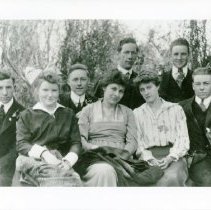
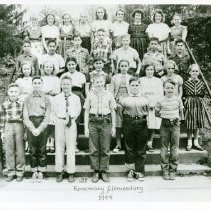
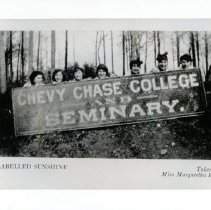
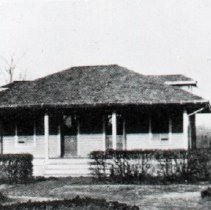
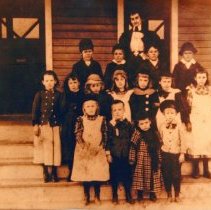
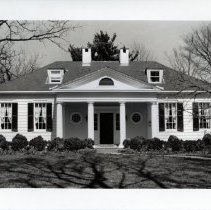
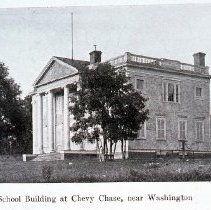
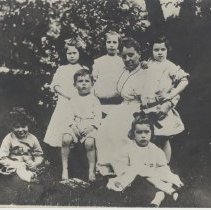
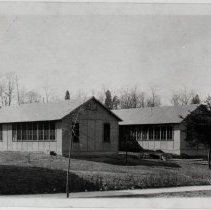
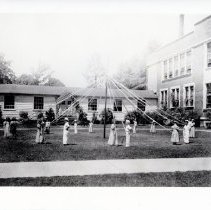
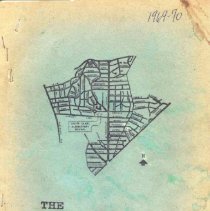
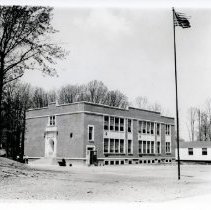
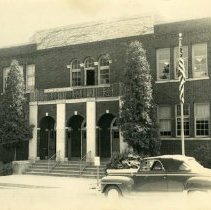
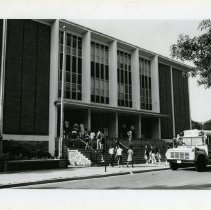
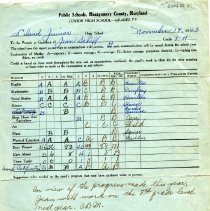
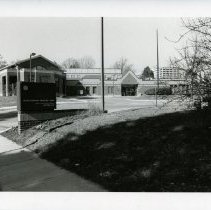
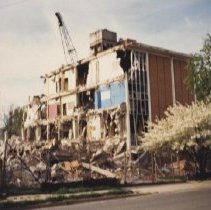
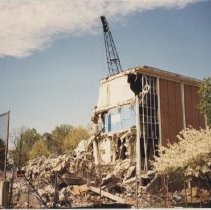
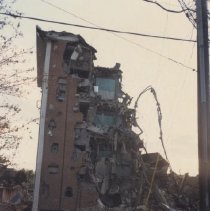
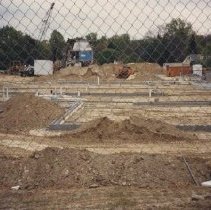
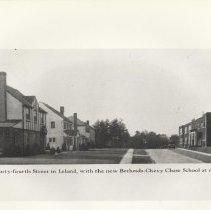
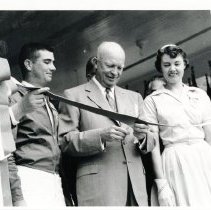
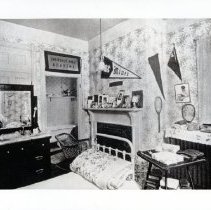
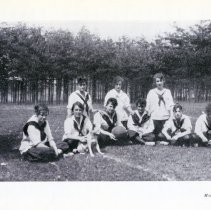
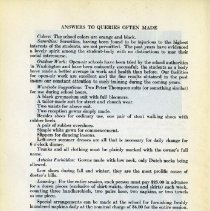
"The Schools of Section Four" Exhibit produced by Evelyn Gerson for the Chevy Chase Historical Society. Homebuyers often make the decision to purchase a property based on the quality of the school system. In 1892, the Chevy Chase Land Company knew that good schools would be an important amenity to attract discriminating buyers. Beginning in 1894, the Land Company embarked on a 100-year legacy of supporting the development and improvement of public schools in both DC and Maryland. Although a few small private schools have existed primarily in the Village, most of Chevy Chase's public educational institutions developed in Section Four: The Bradley Lane Public School, Rosemary Chevy Chase Elementary, Leland Street Junior High, and Bethesda-Chevy Chase High School. Why? Because here the Land Company had larger lots of land that they could donate. In addition, Section Four once boasted a private college for women, the Chevy Chase College and Seminary, now the National 4-H Conference Center. This exhibit takes you through Section Four and explores the history of these early educational institutions. Photographs: 2004.05.01 Leland Junior High School, Class of 1943-1946 2008.140.10 Chevy Chase High School, 1913 2008.140.18 5th grade, Rosemary Elementary School (now Chevy Chase Elementary School), 1954 2008.195.08 Chevy Chase College and Seminary Students Bradley Lane Public School In 1894, the Land Company offered its temporary sales office on the west side of Chevy Chase Circle between Magnolia and Grafton streets to the Montgomery County Commissioners of Education for a local school. There were 15 students the first year, and a full house of 26 students the second. With a rapidly increasing population of families with children, the school moved to a larger building in 1898 at 3905 Bradley Lane, just west of Connecticut Avenue. The Land Company donated the lot to the County and built the structure, while the county school board paid the construction costs of $2,200. Maryland resident children attended classes here until 1903, when enrollment dropped because of the popularity of the E.V. Brown School near the site of the current Chevy Chase, DC Public Library, just south of the Chevy Chase Circle. The Land Company also provided the property for this education institutional to serve families on both sides of the border. The Devereux family purchased the Bradley Lane School building and it has remained a private residence ever since. Public schools in DC at this time were considered some of the best in the county, so many Chevy Chase parents chose to send their youngsters to school on the Connecticut Avenue streetcar over the border. In 1911, DC public schools began charging non-resident students tuition fees, and later excluded them altogether from enrolling. Chevy Chase residents worked with Montgomery County and the Land Company to establish permanent schools, and the Chevy Chase School, presently known as Chevy Chase Elementary School, opened in 1917. Photographs: 1995.07.04B Chevy Chase Land Company Sales Office, Later First Chevy Chase Public School, circa 1897, published in A Brief History of All Saint's Church, Chevy Chase Parish 1000.110.01b Students in front of Chevy Chase's First Public School, circa 1900 2008.166.03 3905 Bradley Lane, Former Schoolhouse 1988.07.08 E.V. Brown School, Chevy Chase, DC, circa 1900, courtesy of Robert A. Truax 1988.05.18 Miss Mactier's School, Northwest corner of Bradley Lane and Connecticut Ave "Rosemary" Chevy Chase Elementary School In 1913, the Land Company provided a parcel of land on the southeast side of Rosemary Circle for the community to erect a new school. Residents raised $5,000 dollars and purchased four portable frame buildings as temporary classrooms to serve first through tenth grade students. In 1917, Montgomery County opened its first official school building, a two-story art-deco inspired brick structure called the Chevy Chase School (although residents fondly refer to it as the "Rosemary School"). Eventually, the high school students were relocated to regional schools, so that the school served first through seventh graders. In 1936, the school expanded by adding another brick building with a long hall connecting the two wings. Subsequently, the school underwent a renovation in the 1970s and, again in 2000, when the PTA, Montgomery County, and the Land Company funded the most recent renovation. The new state-of-the-art Chevy Chase Elementary School is distinguished in its architectural interior and exterior detailing. The design of the building is coherent and compatible with the original school, while preserving its unique location in the heart of the community. Photographs: 1991.05.04 Four Portable Classrooms, Chevy Chase School, circa 1915, courtesy of Edward L. Stock, Jr. 2008.322.01 Maypole Ceremony, Chevy Chase Elementary School, 1939, courtesy of Eda Offutt 1000.110.01a Rosemary Guide, donated by Jean Lineham 2008.322.02 West Wing of Chevy Chase Elementary School, 1936, courtesy of the National Archives Leland Junior High School (Presently the Leland Center) Once Bethesda-Chevy Chase High School, the Leland Junior High School reopened its doors in 1936 to 7th through 9th graders. In 1963, the County constructed a five-story addition, demolishing the original structure to make room for tennis courts and an outdoor play area, which still exist today. The school closed in the spring of 1981 because of declining enrollment and was razed in 1988. The room you are standing in today, with offices for the Town of Chevy Chase and the Montgomery County recreational facility is on the Leland Junior High School's grounds. In April, 1956, Life magazine featured a story called "Parents' Schooldays." It chronicled the adventures of seven parents of Leland Junior High School students who spent three days attending gym classes, discussing literature, making tie clasps in metal shop class, and taking exams. The parents reported to the PTA that the teachers were doing "a better job than they had imagined." Photographs: 2008.275.01 Leland Junior High School Original Building, courtesy of Elsie Irvine 2008.207.01 Leland Junior High School, Elm Street Entrance, courtesy of William Duvall 2004.05.05 Report Card from Leland Junior High School, donated by Jean Schiff 2008.334.05 Leland Recreation Center 2005.07.04, 06, 07, 09 Demolition Pictures of Leland Junior High School, courtesy of Donald O. Sager Bethesda-Chevy Chase High School BCC High School was established in 1926 on Wilson Lane in Bethesda, but was relocated to the neighborhood in 1928 to a building that once stood where the Leland Community Center is today. The original high school building was two stories and fronted 44th street, with wings extending towards Willow and Elm Streets. After the number of students outgrew the building, the high school moved in 1936 to its present location on the old Watkins farm by East-West Highway. The county then converted the Leland building into a Junior High School. Photograph: 1989.13.03 Bethesda Chevy Chase High School at 44th Street, 1929, published in Town of Chevy Chase Past and Present Chevy Chase College and Seminary (Presently The National 4-H Center) Located at 7100 Connecticut Avenue, the National 4-H Center began as the Springs Hotel which opened on May 13, 1894. Lindley Johnson designed the building for the Chevy Chase Land Company to entice DC residents out to the suburbs for recreational activities. Later renamed the Chevy Chase Inn, it offered landscaped grounds, stables, bowling alley, music every evening, and a dollar table d'hôte. The Land Company planned this resort as a magnet to draw potential buyers of land. Because it was a summer resort, it often remained empty during the winters, but eventually rented to a Miss Lea M. Bouligny, who started a school for young ladies during the winter. Then in 1903, the building underwent a renovation that included bricking the façade, adding two side buildings, and creating a trolley waiting room on Connecticut Avenue. It subsequently became the Chevy Chase College and Seminary for Young Ladies, the name changing in 1927 to the Chevy Chase Junior College. The young women at the Seminary began their day with a rising bell ringing at 6:45am and ended with lights out at 10:00 pm. They took courses such as cooking, dressmaking, and elementary hygiene to prepare them for managing their future households. They also studied subjects such as Latin, geometry, and typewriting to prepare them for college or a career. As the picture of the basketball team suggests, there was also an emphasis on physical education to balance both mind and body. In 1951, the National 4-H Club Foundation purchased the property, and after a few years of leasing it to the Army and Johns Hopkins University, the group turned it into a conference center with an overnight capacity for 650 occupants, 30 meeting rooms, and dining and banquet facilities. Photographs: 2008.197.04 Formal Opening of the National 4-H Club Center, President Eisenhower Cutting the Ribbon, 1959, donated by 4-H Resource Center 2008.195.12 Bedroom with Private Bath at Chevy Chase Seminary, 1914-1915 catalogue, from the CCHS collection 1991.09.04b Basketball Team at Chevy Chase Seminary, 1914-1915 catalogue, from the CCHS collection 1991.09.04c List of Answers to Questions and Daily Program at the Chevy Chase Seminary, 1914-1915 catalogue, from the CCHS collection |